

Black Koles · Journal · No. 13 · 5 min read
How do you adapt one campaign for every channel?
To adapt one campaign for every channel, keep the idea fixed and change the piece. Give each channel a role, decide what the idea looks like there, and plan those versions before the shoot. One idea can be a long film, a vertical cut, a homepage loop, an email and a poster. At Black Koles we craft each piece for its medium, not one asset resized six ways.
How do you adapt a campaign for different channels?
You adapt a campaign for different channels by making a different piece for each one from the same idea. It’s working when someone who meets the campaign in the feed, in their inbox and on a billboard knows it’s one campaign, and each piece feels like it belongs where they found it. Force of Nature’s I Am A Force, a brand campaign built around one 90-second film, ran that way in 2026: streaming TV, YouTube and social, an email to customers, its own page on forceofnature.com and billboards in Los Angeles.
That takes three decisions per channel: what the channel is for, what form the idea takes there, and how you’ll know it worked. We put them in one table with a row per channel, and the columns are the platform, the asset and approach, the content, and the measure.
Why isn’t resizing enough?
Resizing changes the shape of a piece. It doesn’t change how people use the channel.
A film made for a wide screen with sound assumes attention. In a feed it has a second or two to earn that attention, usually on a phone held upright and often with the sound off. Cropping the wide film to vertical keeps the slow open and loses the edges of the frame. The feed version needs its own first shot, its own pacing and words on screen.
It runs the other way too. A cut built for the feed looks thin on a television. An email has no motion to lean on. A poster gets one frame and a headline.
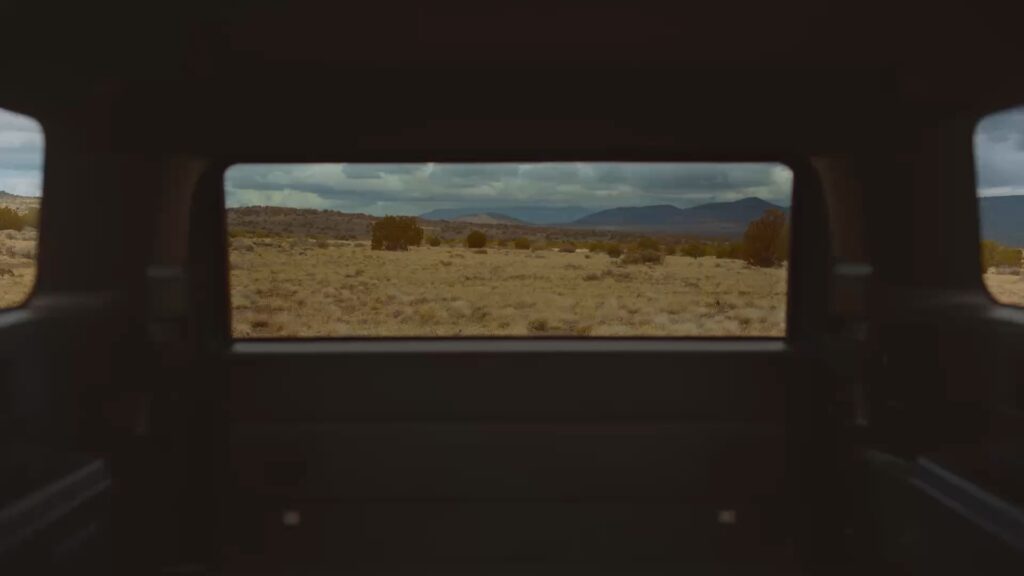
So we adapt each piece to the format, the audience’s behavior and the way people engage on that channel. The idea, the look and the line stay the same. On the Toyota 4Runner launch films, made with Outside, we handled production and camera, and the brief asked for two films from the same footage: a character film and a made-for-TV cut, without one compromising the other.
What is a channel role?
A channel role is a short statement of what one channel does for the brand that the others don’t. We write four things for each channel.
Role. The channel’s job in the whole system: depth, discovery, community, proof or sales.
Focus. What the channel talks about most, and what it leaves to the others.
Tone. How the brand sounds there. The voice is the same everywhere, but the register changes between a long film and a reply to a comment.
Tactics. The formats and habits that do the work: series, cut lengths, how often, what links where.
Every channel carries the same message, and each does a different job with it. Once the roles are written down, you know what each channel needs before you look at the footage.
One campaign, multiple channels: what does each piece look like?
Each piece takes the form its channel calls for. Here’s one campaign idea across eight placements. The roles are typical ones. Set your own from your audience and your channels.
| Channel | Its job | What the piece looks like |
|---|---|---|
| Long-form video channel | Depth and search | The full film, titled to be found |
| Social feed | Discovery | Vertical cut, hook first, text on screen |
| Website | The hub | Silent homepage loop, full film on a landing page |
| Bring people back | A still, a line and a link | |
| Paid social | Reach new people | Short cuts with different openings |
| Streaming TV | Scale | A :30 or :15 built for sound and a big screen |
| Billboard or retail | Presence at the shelf | One frame and the headline |
| Event | A shared moment | The film on a big screen, its people in the room |
Every row has a different form. None of them is the hero film at a new size.
How do you plan the versions before the shoot?
List the versions first, then build the shot list from them. Most of what makes a channel version good has to be captured on set.
- Frame for vertical and horizontal on the day. A wide frame cropped later rarely holds up in the feed.
- Shoot openings for the short cuts. The first shot of a 15-second piece is rarely the first shot of the film.
- Give photography its own time. The email, the poster and the product page depend on it.
- Record clean sound, and plan for no sound. Some placements are silent.
- Decide who captures the quick, informal footage. On a small crew it won’t happen by accident.
- Clear usage for every placement on the list, paid included.
In post, finish the hero first and cut the versions from the locked edit. Every piece then shares one grade, one mix and one set of approved shots. For Force of Nature’s It’s Just Better, four customer stories that meet at one dinner table, three days of shooting in Utah made a 60-second film, a :30, a :15 for each of the four storylines in every social ratio, and a library of stills.
How do you measure each channel?
Measure each channel against its role. Don’t rank the channels against each other on one number.
For a long film, look at how much of it people watch. A feed cut is there for reach and shares, and a website loop for what people do next. Email comes down to clicks. With paid, watch what it costs to reach the right person.
Put the measure in the table next to the piece before launch. One primary measure per piece is enough. Use the numbers to inform the next round of work. Don’t let them dictate it.
What stays the same on every channel?
The idea, the look and the line stay the same on every channel.
We test an idea before any of this: it should survive as a single frame with a headline. If it can, it will hold on a billboard, in a thumbnail and in the first second of a feed video. If it needs ninety seconds and a voiceover to make sense, it will fall apart on most channels.
A strong idea is also what makes it safe to change everything else. Eight different pieces still read as one campaign.
How Black Koles does it.
Black Koles is a creative agency and production company in Salt Lake City. We shape each piece for where it shows up, whether that’s a feed, a billboard, an event or an inbox. The versions are in the plan before we shoot, and a six-second cutdown gets the same care as a thirty-minute documentary.
If you want to see one campaign carried through every channel, start with I Am A Force. The 90-second hero film, the cut for streaming TV and YouTube, the :15s, the landing page, the email and the billboards in Los Angeles are all on one page. Our About page has who we are and how we work, from strategy through rollout.