

Black Koles · Journal · No. 07 · 5 min read
Filming in Utah: what out-of-state productions should know
Filming in Utah comes down to three questions: who manages the land you want to shoot on, what the season will do to it, and whether the state film incentive fits your kind of project. Permits depend on the land manager, and each has its own process. The Utah Film Commission describes its incentive as for narrative, documentary and episodic series, so a commercial shoot should not count on it. Confirm every detail with the Utah Film Commission and the land manager before you budget.
Why do productions come to Utah?
Range, mostly. The Wasatch Mountains, Park City, the Bonneville Salt Flats, the red rock around Moab, Zion and St. George are all in one state. We’re based in Salt Lake City, at the foot of the Wasatch, and we shoot across the state. We filmed Force of Nature’s It’s Just Better campaign in Salt Lake City, at a meat case in Layton and at Trial Lake in the Uinta Mountains, and ASSOS’s Supernatural 2.0 cycling launch in the San Rafael Swell.
That range is also the planning problem. Those places are managed by different agencies, sit at very different elevations and behave differently by season. A plan that works in one won’t carry over to the next.
Do you need a permit to film in Utah?
It depends on where you stand and what you’re doing there. There is no single answer for the state. The first step for any location is to find out who manages that exact piece of ground, then ask that office.
The managers a production is likely to meet in Utah include:
- The Bureau of Land Management, through field offices such as Salt Lake and Moab.
- The National Park Service, for parks such as Arches, Canyonlands and Zion.
- The US Forest Service, for national forest land such as the Manti-La Sal.
- Utah State Parks.
- Cities, including Salt Lake City and Park City, for streets and public property.
- Private owners, including resorts and ranches.
Ask each one the same things: whether a commercial film or photo shoot needs a permit at your crew size, what it costs, how long approval takes, and what proof of insurance they want. We don’t list fees or timelines here, because they change and they differ by office.
The method is the same for the Bonneville Salt Flats, Moab, Zion or a state park. Identify the manager, call or write, and get the answer in writing.
Who issues film permits around Moab?
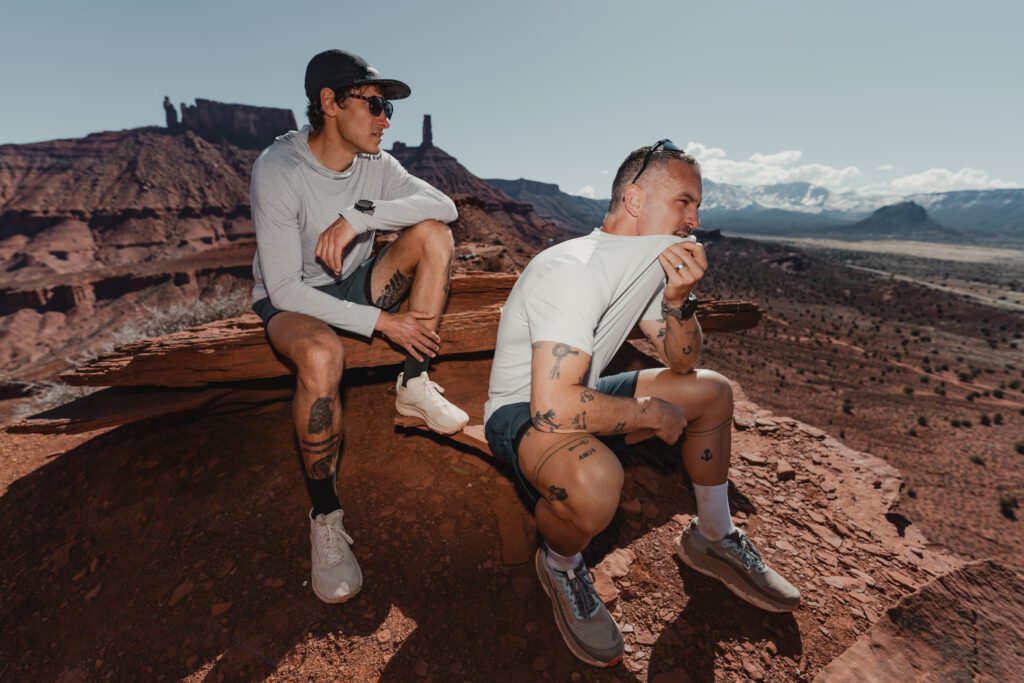
No single office does. Around Moab, Arches, Canyonlands, the Bureau of Land Management and the Manti-La Sal National Forest each have their own permit process. A single day that moves between a park overlook and a stretch of desert road may involve more than one of them.
The Moab to Monument Valley Film Commission keeps a permits page at filmmoab.com that lists Bureau of Land Management field offices by county, with contacts. It’s a sensible first stop for that part of the state.
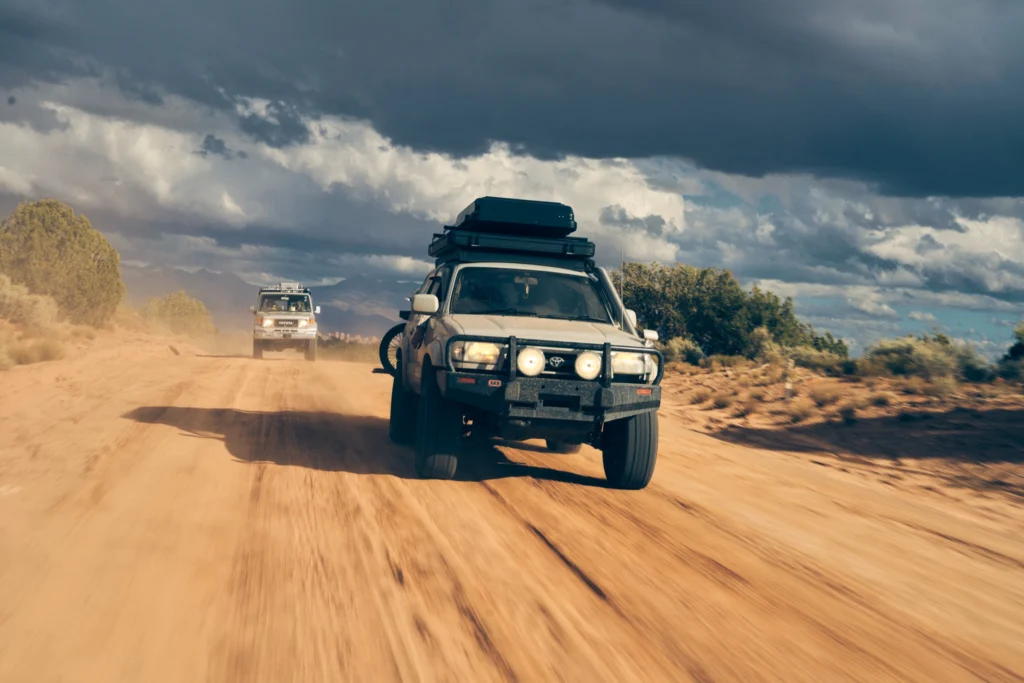
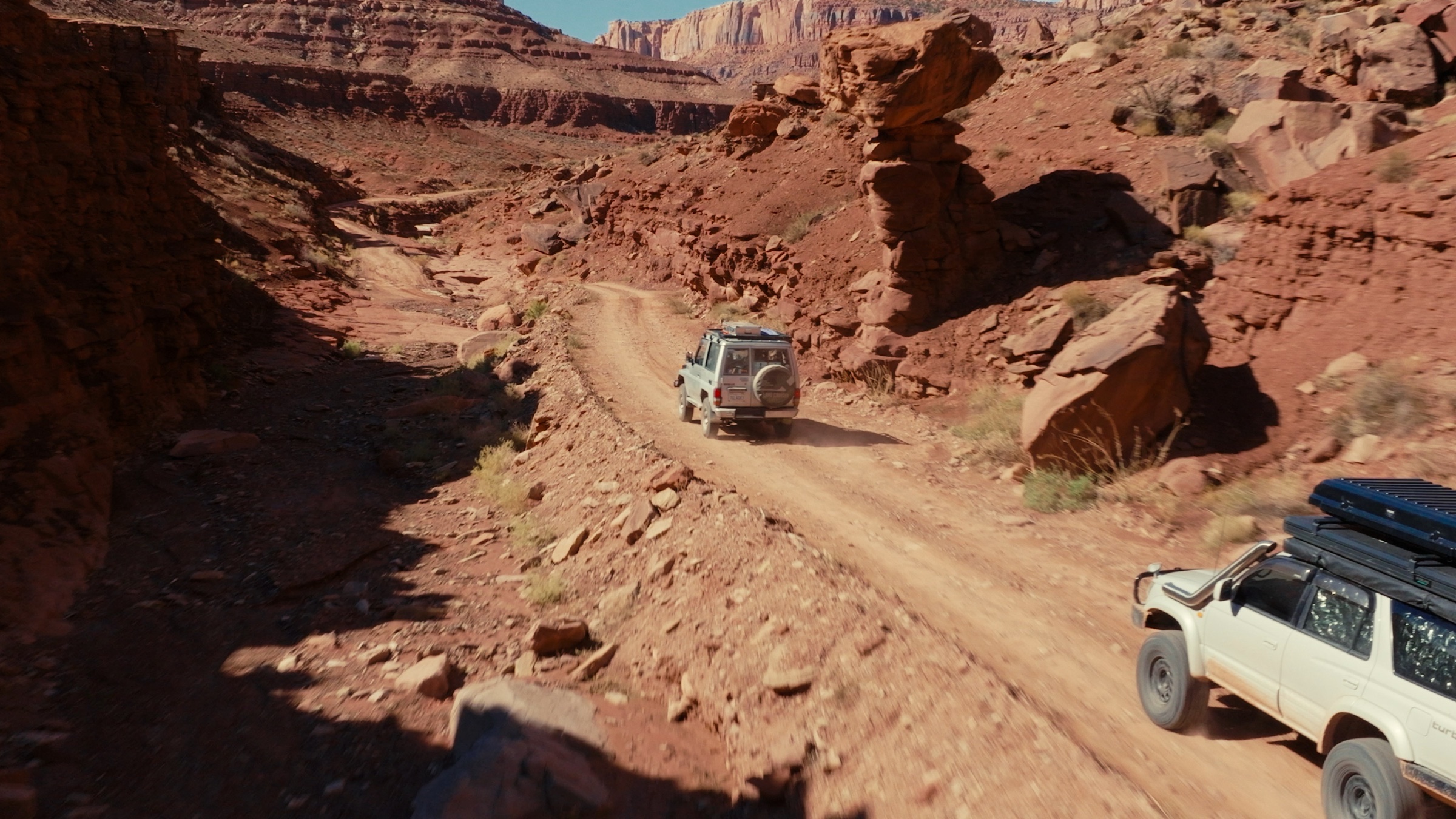
We know the area from our own shoots. Path Projects’ New Coordinates year opened with a spring 2024 shoot in Moab, and we made Goal Zero’s Yeti 1500 launch film in the desert outside Moab.
“Black Koles crushed it for us. Super professional, incredibly creative, and they went above and beyond at every stage of the process.”
Does the Utah film incentive cover commercials?
Mostly not, on the published description. The Utah Film Commission describes its motion picture incentive program as “available for narrative, documentary, and episodic series intended to be distributed commercially”.
For a brand or agency planning a commercial, a product film or a photo shoot, the safe assumption is that the incentive is not part of the budget.
Whether a branded documentary could qualify is a question for the Film Commission. Don’t assume it either way. Ask before the budget is approved.
The Utah Film Commission is the state office for film production, and its site at film.utah.gov is the right source for anything about state programs. It also publishes a directory of production service companies in the state. For a specific location, the land manager still has the final word on permits.
When should you shoot in Utah?
Any season can work, but each one costs you something, and the trade is different at every elevation.
Winter means snow in the Wasatch and at the resorts. That is the reason many productions come, and it adds cold, short days and weather holds. Spring is mud season in the mountains, when snow is melting and trails and dirt roads are soft. Summer brings heat to the desert, which changes working hours for crew and talent. Late summer is monsoon season in the south, with afternoon storms. Fall is settled in much of the state, and it is short at altitude.
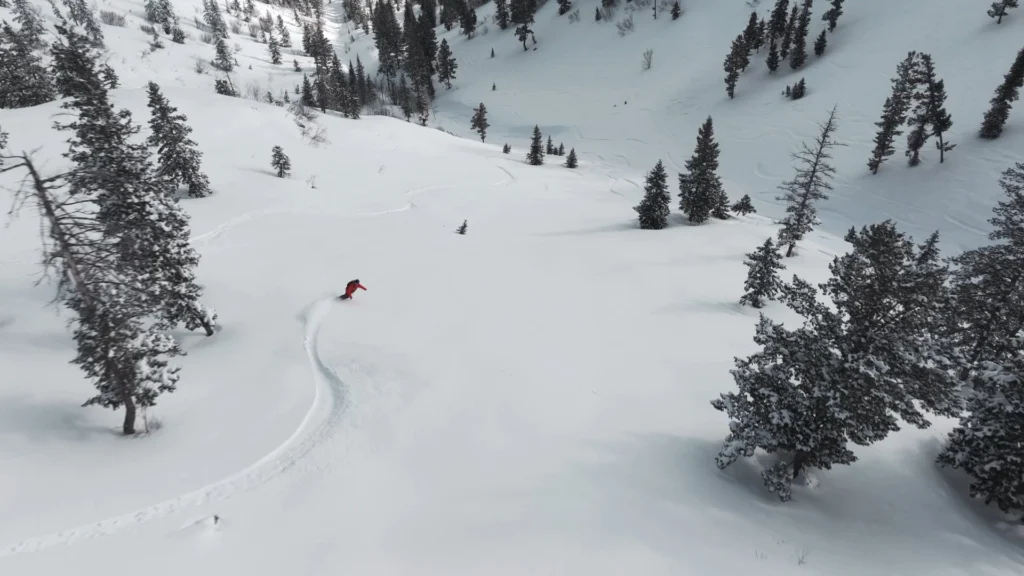
None of this rules a season out. Our Davenport film for Powder Mountain was planned to finish in bluebird early-spring powder, and we ended up shooting a late-season storm instead, on one more pickup day. On the same mountain, our trail-preview film for the new bike park was shot in the fall with the young riders of the Outlaw Bike Team and delivered for the park’s launch the next spring. Build weather days into the schedule, and scout in the season of the shoot if you can.
What else should an out-of-state production plan for?
Distance. Locations that look close on a map can be a long drive apart. Decide early whether the shoot is based in Salt Lake City or in the south of the state, and be honest about travel days.
Drones. Don’t assume a film permit covers aerial work. Ask the land manager about drones when you ask about the permit.
Insurance. Expect to be asked for proof of insurance by land managers and private owners.
Local knowledge. A local producer or production partner knows which office to call, which roads close in a storm and which locations are overused. Out-of-state productions commonly hire one for scouting, permits and crew.
Dated information. Much of what is online about Utah permits is old. Check the date on anything you read, including this article, and confirm with the source.
How Black Koles does it.
Black Koles is a creative agency and production company in Salt Lake City, Utah, founded in 2019. We work from a studio in the city and handle permits and local logistics for our shoots.
To see a Utah shoot from plan to finished film, start with Waste No Time, the Goal Zero film. The case study shows how the plan came down to one desert scene, why an October shoot could still read as spring, and the shoot itself, from a garage to a camp. For who we are and how we work, see About.