

Black Koles · Journal · No. 20 · 6 min read
How should an outdoor brand build its marketing strategy?
Start from the business problem. Map every channel you have, with the website as the hub. Plan the year in three tiers: a brand campaign, a few product campaigns and monthly channel stories. Make fewer, better things, release them on a calendar and measure each against the goal it was made for. That’s how we build it at Black Koles, from the campaign and film side.
What is an outdoor brand marketing strategy?
An outdoor brand marketing strategy is the plan for what the brand says, to whom, through which channels, across a year, and how it will know the plan worked. Most advice on the subject starts with ads and search. Those matter, and they work better when there’s something worth pointing them at.
We come at it from the other end, because campaigns and films are the work we do. The order is: the business problem, the ecosystem, the year in tiers, the making, the calendar, the measure.
Start from the business problem
We start every project with the business problem: what the brand needs, who has to see it, and what should happen when they do.
Outdoor brands tend to have one of a few problems. The brand is known in one sport and unknown in the next one it’s entering. A technical product gets explained badly on the shop floor. A direct business needs sign-ups more than reach. Every competitor is using the same summit photo. Each of those is a different year of work.
Write the problem as two boxes: where we are, and where we want to be. Strategy bridges the gap. Then look for the opening, which is where the brand’s strengths meet a need customers have. And say what success looks like in plain terms: awareness, a habit, a cause, sign-ups or sales.
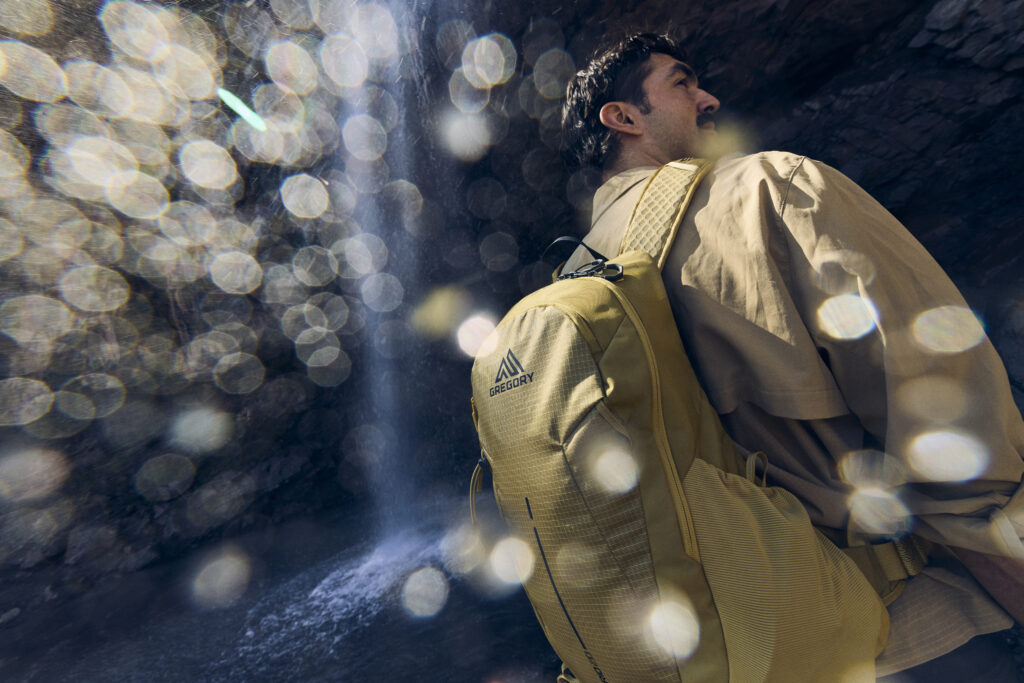
For Gregory, a heritage outdoor pack brand, the job was to welcome a broader audience while staying true to its technical alpine roots. That became Welcome to Gregory, a global relaunch campaign we took from brand strategy and creative direction through production and final delivery.
Map the ecosystem
Content doesn’t exist in a vacuum. A brand’s ecosystem is everything it owns and shows up in, with the website as the hub where people end up. In a healthy one, the channels share a message and each carries it in a way made for that channel.
For an outdoor brand the map is wider than digital. Draw three groups:
- Digital: the site, email, social, paid, the blog.
- Community: retailers and dealers, athletes, ambassadors, events.
- The content itself: films, stories, product campaigns and the brand campaign.
Then test it. Pick any channel and ask what it does for the others. If there’s no answer, that channel is running on its own, and whatever you post there stops there.
“We’ve found a collaborative creative partner who understands campaigns holistically and can shepherd a project seamlessly through from ideation to execution. Black Koles sets a bar for creative that’s simply hard to beat.”
Plan the year in tiers
Plan the year in three tiers: a brand campaign at the top, a few product campaigns under it, and channel stories month to month.
Brand campaign. A values-led campaign that runs a year or more and lines up with the brand’s mission. It gets 360 degrees of support: paid, owned and earned. The goal is awareness. Welcome to Gregory was built at this tier. So was I Am A Force, the awareness campaign we made for the regenerative meat company Force of Nature, with streaming TV, YouTube, social, email and billboards behind it.
Product campaigns. Product-led campaigns that run for weeks or months inside a season and line up with the brand campaign. They get 180 degrees of support. The goal is consideration. Patagonia’s Fall 2026 fly fishing campaign for the redesigned Swiftcurrent Wading Jacket and the Guidewater Packs is one. So is Supernatural 2.0, the cycling launch for ASSOS of Switzerland.
Channel stories. One product story told inside a month, tied back to a product campaign and run mostly on owned and earned channels. They get 90 degrees of support. The goal is conversion.
The tiers decide where the money goes before anyone argues about a single post. Most of it sits at the top, where the audience is widest.
Make fewer, better things
A year built this way needs fewer pieces than most teams think, and each one has to be good enough to carry weight. A film that took real time can be cut, reframed and released for months. Something made in an afternoon usually gets one post.
Some ways that has looked in our work:
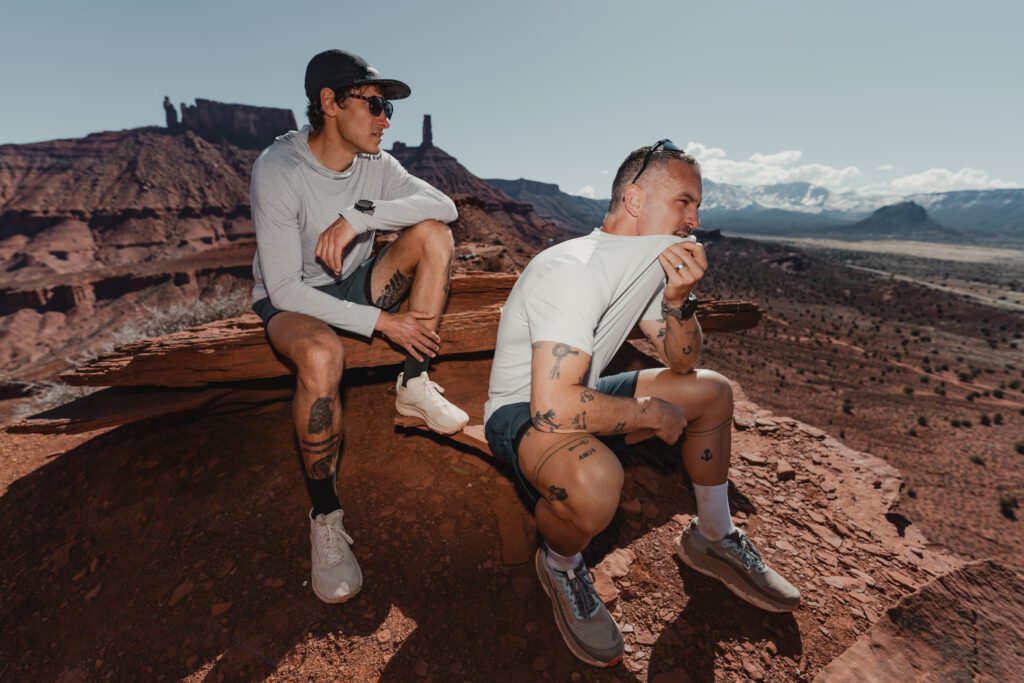
- Running: New Coordinates for Path Projects was a year of content from three shoots, in Moab, Catalina and Vancouver.
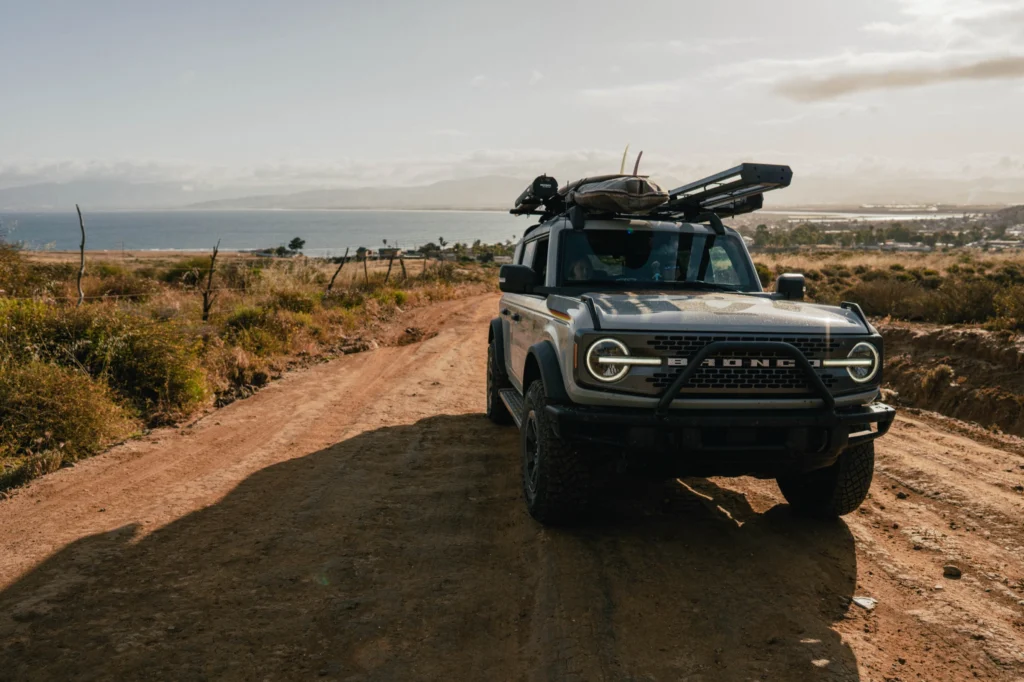
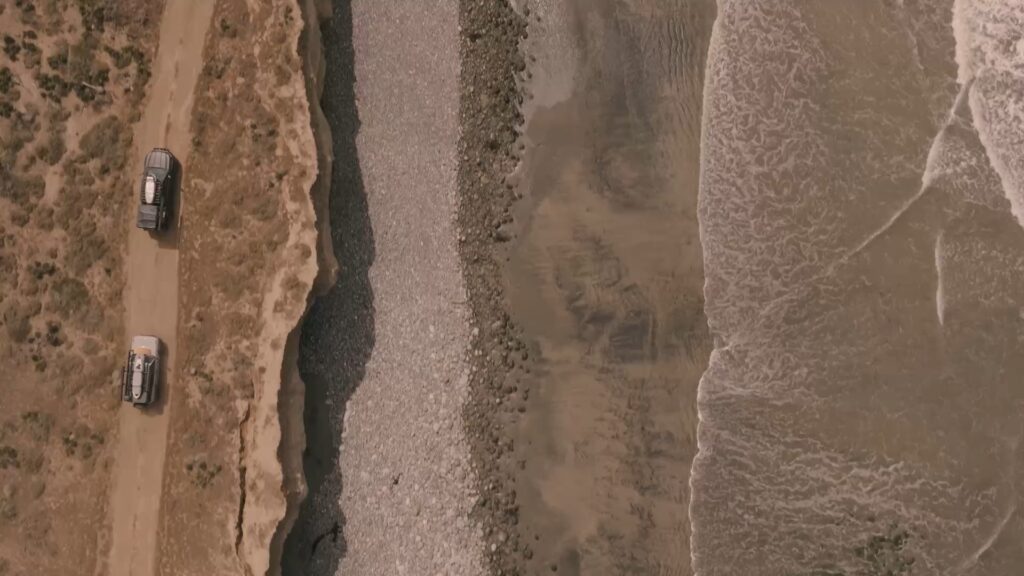
- Overland: Border Lines for Yakima is a series of road-trip films: Baja in 2023, British Columbia in 2024 and the Southern Oregon Coast in 2025.
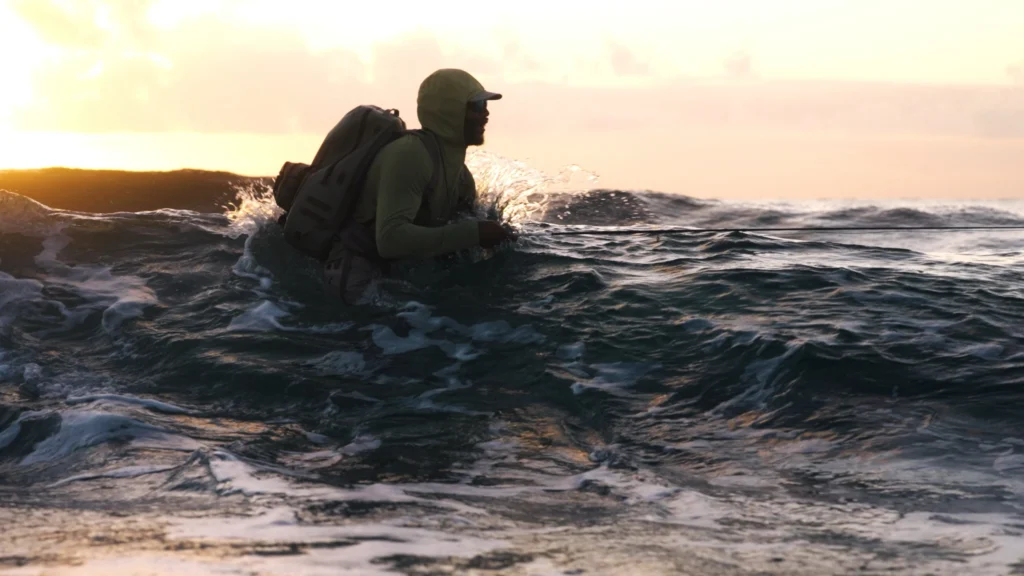
- Fly fishing: TOM and Oly’s Dean, two documentaries for Patagonia Films, each about a person and a river.
- Snow: Range Finder, a 33-minute documentary on pro snowboarders Mark Carter and Bryan Iguchi, filmed over a winter in the Wyoming backcountry and premiered with a tour.
- Bike: a trail-preview film for the launch of Powder Mountain’s bike park, delivered as a film of about a minute with two 15-second cuts.
These are different sizes of project with the same logic. Decide what the piece is for, make it properly, and plan the cuts before the shoot. A six-second cutdown gets the same care as a thirty-minute documentary.
Release it on a calendar
Every campaign, at every tier, runs in three phases: hype, launch, sustain. Each piece gets a job, a channel and a date before it’s made. Teasers build toward the date. The lead film lands on it. Cutdowns and stories keep the campaign showing up after.
Each piece is shaped for where it shows up: feed, billboard, event, inbox. Not one asset resized six ways.
Plan the calendar at two levels, the year and the quarter. Outdoor brands have a harder version of this than most, because the product seasons, the retail calendar and the weather all set dates you don’t control. Work that launches with a season often has to be shot a season ahead. That’s one more reason the tiers come first: you can only shoot ahead for campaigns you’ve already decided to run.
Measure against the goal
Each tier has a goal, so each has a measure. What doesn’t get measured doesn’t get managed.
- Awareness: reach, views, new followers.
- Consideration: site sessions, time spent with the films, sign-ups.
- Conversion: sales.
- After the sale: reviews and repeat customers.
Set targets against last year’s numbers, per channel. The numbers tell you whether the plan is working. They shouldn’t push you off a consistent story to chase a trend.
How Black Koles does it.
Black Koles is a creative agency and production company in Salt Lake City. Asher Koles and I both came to this work from the outdoors. I was a professional snowboarder, and he guided fly fishing for ten years. The outdoors is where we started, and it taught us weather, patience and how to get the shot when conditions say no. We’ve both worked on the brand side and the agency side since.
One team does strategy, creative, production, post and rollout, so the people who plan the year make the work. See New Coordinates for Path Projects next. Path Projects let us in on the strategy, and each of the year’s three shoots was planned to feed a full channel mix, not a single deliverable. It shows what a year of work looks like when the strategy comes before the shoot. To meet us and see how we work, go to About.
We can hand over the roadmap or run it. If you’re planning next year now, start a project.