

Black Koles · Journal · No. 39 · 5 min read
What performs on social media for a brand? What running a brand’s channels taught us
No single format performs best on social media for a brand. What performs is a post that opens on a strong hook and says something the brand believes, made in a format people recognize and posted on a steady schedule. At Black Koles we ran organic social for Force of Nature, a regenerative meat company, from 2023 to 2026. These are the lessons from that work.
What type of content performs best on social media?
The type matters less than the opening. On the Force of Nature account the top posts were reels, carousels and single stills. What they share is a hook that makes someone feel something or want the next line.
The hook matters more than the length. We’ve had very short videos take off, and films several times as long take off too. People drop out in the first seconds when nothing gives them a reason to stay, and that’s true at any runtime. So the open gets the edit time before anyone argues about length.
A broad statement on screen, elaborated in the caption. Most of our top posts put the hook on screen as text: one short, sweeping line. The caption carries the detail. The format suits a brand with something to teach, because the claim gets the frame to itself and the evidence gets room underneath.
Say what the audience wants to hear, and what it doesn’t. A brand with a real position has things to say that part of its audience won’t enjoy. We say those too, plainly, and back them up. A feed that only agrees with its followers gives them nothing to pass along.
UGC vs branded content: which should a brand post?
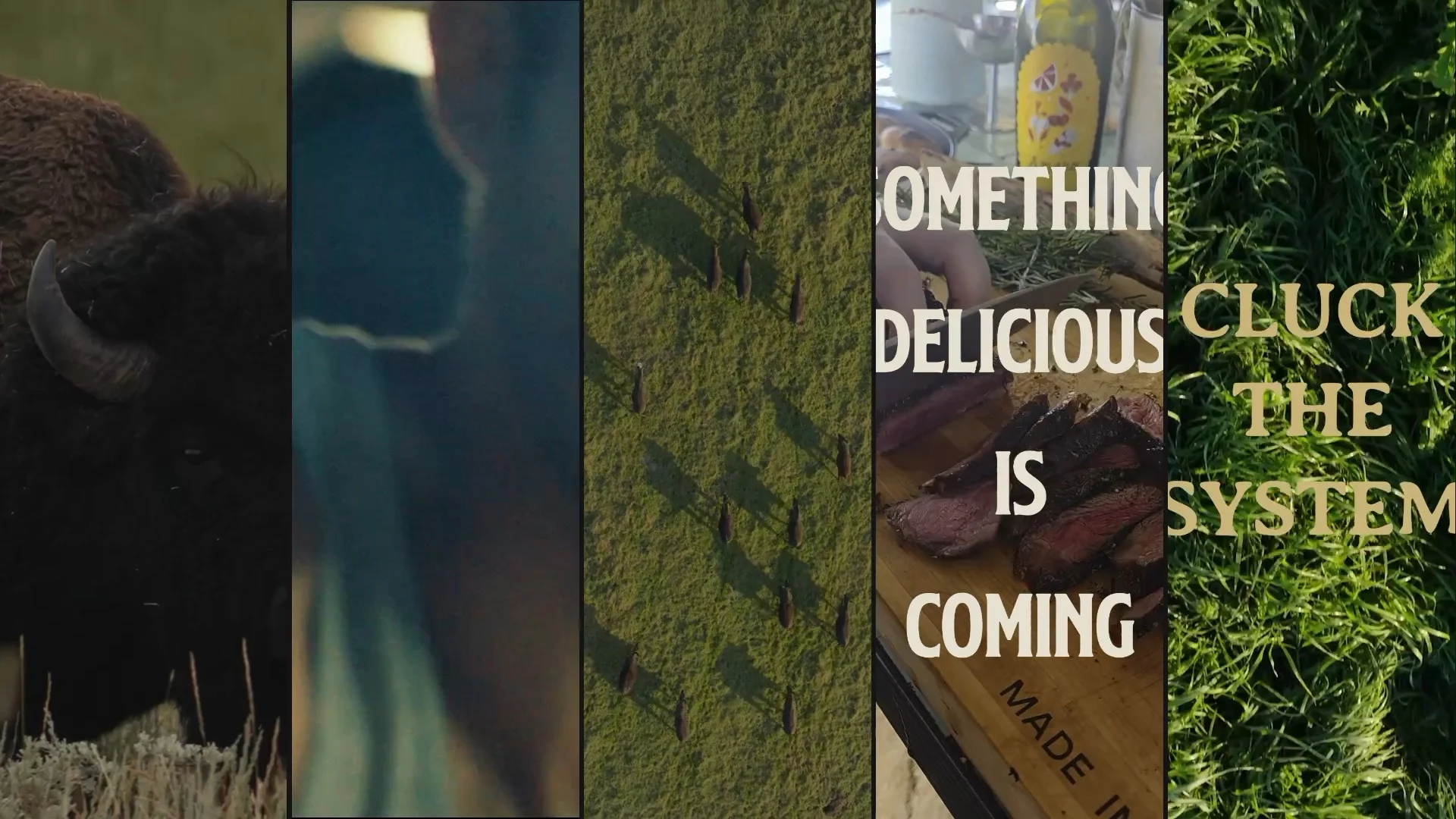
Both, with original content as the base. Reposts are quick and free, so a feed can fill up with them without anyone deciding it should. On Force of Nature we cut back on reposts and made more original content. Every film in Mission in Motion, the series we made on the ranches behind its meat, came with its own set of cuts for the feed.
Original beats reposts. The reason is control. A repost says what someone else chose to say, framed their way. An original post says what the brand needs said that week. Customer content still has a job: it shows real people using the product, which a brand can’t say about itself.
Rotate creators on results. In 2025 we ran Force of Nature’s creator program with its team, and the plan was to keep the creators whose posts performed and bring in new people for the rest. A changing roster also keeps the feed from looking the same month after month.
How do you keep a brand’s feed consistent?
Reuse what works and plan further out than feels necessary.
Repeatable formats and mini-series. Starting every post from a blank page is slow, and it makes the feed noisy. We keep a short list of formats that have already worked and run them as series. The audience learns what to expect, and the team makes a new episode instead of inventing a new post. Our interviews for Mission in Motion became episodes of the company’s Thought Leaders series.
Plan a quarter ahead, against the pillars. Every post was assigned to a content pillar before anyone made it, and our 2025 plan moved the planning a quarter ahead, with requests coming in on a fuller form. The point is fewer revision rounds: the disagreement happens over a plan, which is cheap to change, and not over a finished post.
“They feel like an extension of our internal team. Our social media is more engaging and performant, and our content is more inspiring and heartfelt.”
Long form vs short form video content: where does each go?
Short form goes in the feed and long form goes to YouTube. Short video is how new people find a brand. Long form is for people who already care and want the whole story, and YouTube is where they go to watch it. A film there can also be found by search long after the week it came out.
A long film dropped whole into a feed gets judged on its first seconds like everything else. So the film lives on YouTube, and the feed gets cuts built for the feed, each with its own open.
Does high production value matter on social media?
It matters for some jobs and gets in the way of others. We use produced films for the tentpoles and for paid, and lighter content for the days between. Force of Nature’s fall 2025 tentpole, It’s Just Better, was a produced 60-second film that ran on streaming TV. It came with a :30, and a :15 for each of its four storylines in every social ratio.
A phone is the right tool when the post is a person talking to camera or a quick answer to something happening that week. Polish there reads as an ad, and it slows you down. Production earns its cost when the piece has to carry a campaign for months, run on a television or a billboard, or make the product look its best.
| Content type | Where it earns its place | What it needs |
|---|---|---|
| Produced hero film | Tentpoles, paid, big screens | A full shoot and a rollout plan |
| Cutdowns of the hero | The feed and paid, during a campaign | Their own openings, shot on set |
| Phone footage | The days between campaigns | A named person to capture it |
| Creator content | Reach, a different voice | A brief and agreed usage |
| Reposts, customer content | Proof from real people | Permission |
| Long-form film or series | YouTube | A story worth the time |
One thing to settle before the shoot is who captures the phone footage. A small crew running the main cameras can’t also shoot for the feed. If the feed needs its own footage, put a person on it.
When should a brand put paid behind a post?
After the post has proved itself, with one exception: a launch.
For Force of Nature, a boost budget went behind the organic posts that were already performing, every month. Organic works as the test: it shows which hook and which format hold up before money goes behind them. A big launch is different: there, the push was planned ahead of time. Bigger paid plans can wait until the account has enough history to know what good looks like.
How much should the numbers decide?
We reported every month, and the numbers told us which hooks and formats to keep. What doesn’t get measured doesn’t get managed.
The numbers don’t set the voice, though. A consistent voice comes first, and we’ll take a thoughtful post over a trend the brand has no business joining. An account that copies whatever spiked last week ends up with a feed that doesn’t sound like the brand.
How Black Koles does it.
Black Koles is a creative agency and production company in Salt Lake City. For Force of Nature we make the campaigns, and from 2023 to 2026 we also ran the organic social, so the social plan and the shoots came from one team. The tentpoles get produced films: I Am A Force, the flagship campaign for the first half of 2026, and It’s Just Better in fall 2025. Between them come the series, like Mission in Motion and Living Proof, five animated films built on the company’s research.
A caveat. These lessons come from one account in one category. Your pillars and your audience are your own, so test them on your account before you take our word for it.
The case study to read next is Force of Nature’s social media, because it’s the account these lessons come from. For who we are and how the team works, see our About page.